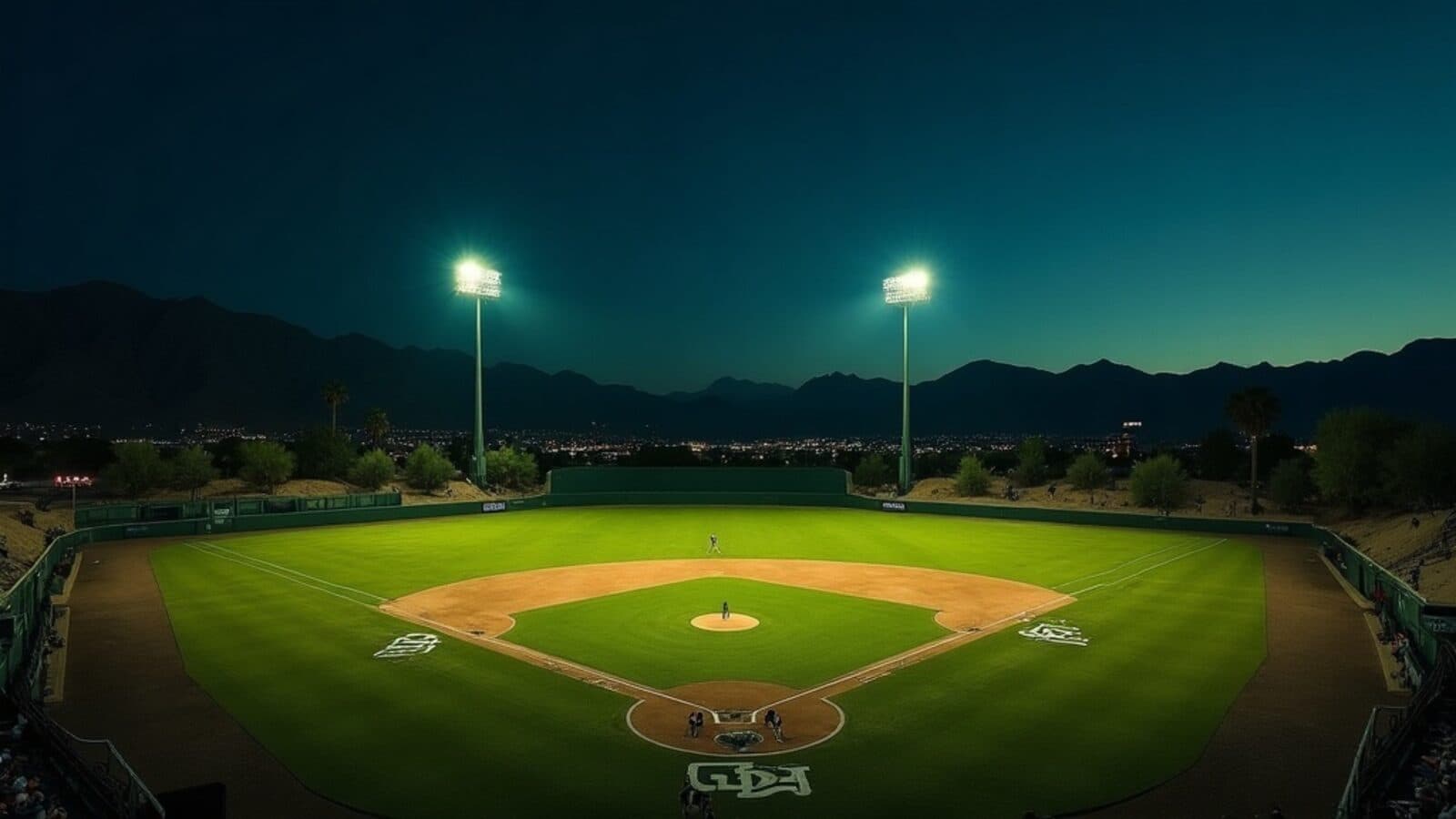
The five Las Vegas Athletics minor league prospects with the highest chance of making a meaningful impact on the major league roster within the next 24 months.
The Pipeline Matters More Than Ever
The Athletics have always had a philosophy built around player development. When you cannot outspend the Yankees or Dodgers in free agency, you draft and develop your way to competitiveness. That philosophy produced the Moneyball teams, the 2012 wildcard team, and multiple playoff appearances against all financial odds. It also, repeatedly, produced teams that were good but not quite good enough, and that sold off the core when the window closed.
In Las Vegas, the development pipeline is the most important factor in whether the franchise builds something lasting or repeats the cycle of near-misses. Here are the five prospects most likely to arrive and actually change what the big league team looks like within the next 24 months.
1. Tyler Soderstrom, Catcher/First Base

Soderstrom was the top pick in the 2021 draft and has spent five years in the system developing. He hit for significant power at Double-A and Triple-A in 2024 and 2025, with raw pop that shows up in both game power and the exit velocity data. The question that has followed him throughout his minor league career is the position. He was drafted as a catcher, has tried to stick behind the plate, and has had multiple evaluators suggest that his long-term home is first base or a corner outfield spot.
Whatever position he winds up at, the bat is the reason he matters. If Soderstrom can hit .260 with 25 home runs in his first full major league season, the A's lineup transforms from below average to dangerous. He is the most impactful near-term arrival in the system.
2. Max Muncy, Shortstop/Second Base
Not the Max Muncy of the Dodgers. This is a younger prospect with the same name who has earned attention through a combination of defensive versatility and an improving bat. He plays shortstop and second with equal comfort, gives the A's a legitimate defensive upgrade at both positions, and has enough bat to stick in a middle-of-the-order role if his development continues on the current track.
Shortstop defense is undervalued in public conversation but highly valued by the teams that have to run games out. Having a shortstop who saves runs on the defensive side while also contributing offensively is worth more than a first-glance power projection suggests.
3. Jacob Wilson, Shortstop
The Athletics have always had a philosophy built around player development.
Wilson was one of the organization's top priorities in recent drafts and has moved quickly through the system. He is a contact-first player with high baseball IQ, good baserunning instincts, and the kind of athleticism that lets him play multiple positions without being below average anywhere. His home run numbers will never impress anyone. His on-base percentage and his ability to put the ball in play consistently make him the kind of leadoff option the A's desperately need.
If Wilson arrives and performs as his minor league track suggests he can, he solves the table-setter problem that has plagued the lineup for the last several years.
4. Denzel Clarke, Outfield
Clarke is the most toolsy player in the system. The athleticism is obvious, the arm is plus, and the raw power is significant. The development question is the strikeout rate, which has run high through every level of the minors. When players with Clarke's physical tools learn to make contact, they become stars. When they do not, they become cautionary tales about athletic potential that never translated.
The A's development staff has worked with Clarke on shortening his swing and improving his pitch recognition. The early results from 2025 were encouraging, strikeout rate trending down, walk rate trending up, which is the right direction. Give this one two years before drawing conclusions.
5. Henry Baez, Starting Pitcher
Pitching is always the highest-risk player development category because arm injuries can derail even the most carefully developed careers. Baez has mostly avoided those problems so far, which is the first encouraging sign. The second is that his stuff translates across multiple levels without significant degradation, his fastball is 94 to 97 mph at Double-A, not 88 to 92 mph the way some pitchers lose velocity as the competition improves.
Baez is not a strikeout pitcher in the traditional sense. He generates soft contact and induces weak grounders at a high rate, which means he needs good defense behind him to be effective. On a team that is building its infield defense around Wilson and Muncy, the combination is interesting.
The Las Vegas era needs these players to arrive healthy and ready. The stadium is being built. The fans are forming. Now the product needs to give them reasons to come back every night.
Find Las Vegas A's tickets and gear through our affiliate partners. Purchases made through these links support independent coverage at no extra cost to you.
For more A's coverage across the network:
Frequently Asked Questions
Which prospect is most likely to make the biggest near-term impact?
Tyler Soderstrom, whose bat, with power at Double-A and Triple-A, is the reason he matters regardless of whether he sticks at catcher or moves to first base or a corner outfield spot.
Could a prospect solve the A's leadoff problem?
The post points to shortstop Jacob Wilson, a contact-first hitter whose on-base ability could fill the table-setter role the lineup has lacked.
Why does the A's farm system matter so much?
Because the team cannot outspend the Yankees or Dodgers, so drafting and developing talent is the primary path to building a lasting contender in Las Vegas.