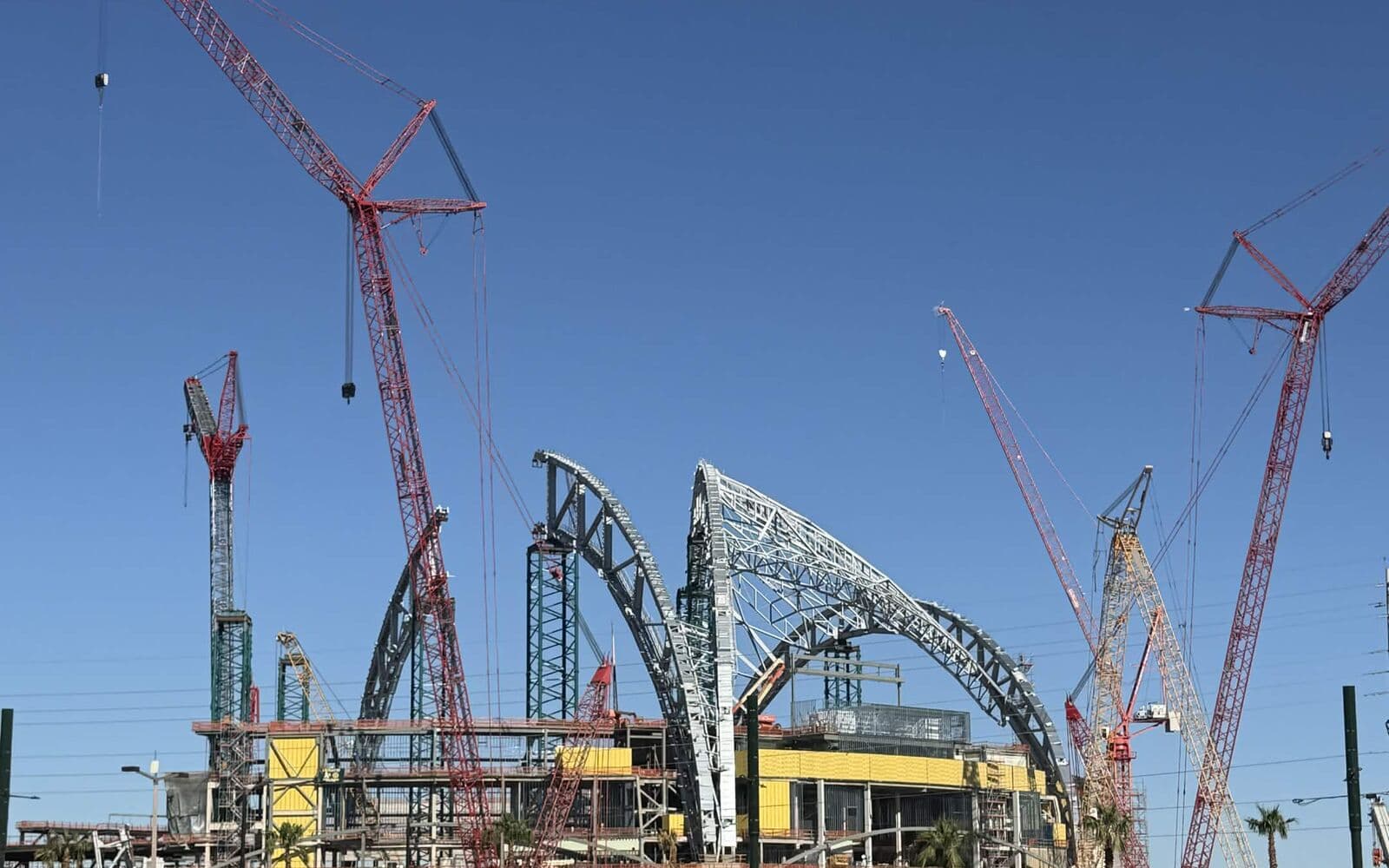
The A's Las Vegas stadium is scheduled to open for the 2028 season. As of October 2026, the Las Vegas Review-Journal reports construction is on time for a February 29, 2028 completion date, and crews finished the third and tallest roof truss arch on October 7, 2026. Here is every dated milestone so far, and what comes next.
This page answers one question: when. For why the team left Oakland, see why the A's are moving to Las Vegas. For the building's design, seats, and cost, see our guide to the A's new Las Vegas ballpark.
The Short Answer
The team's official ballpark site lists Opening Day 2028. The Review-Journal reported on September 29, 2026 that construction remains on time for a February 29, 2028 completion date, which leaves about a month before a typical late-March Opening Day. Team president Marc Badain said in August 2026 that the project remained on schedule for the 2028 season. The exact date of the first game has not been announced.
The A's Las Vegas Stadium Timeline
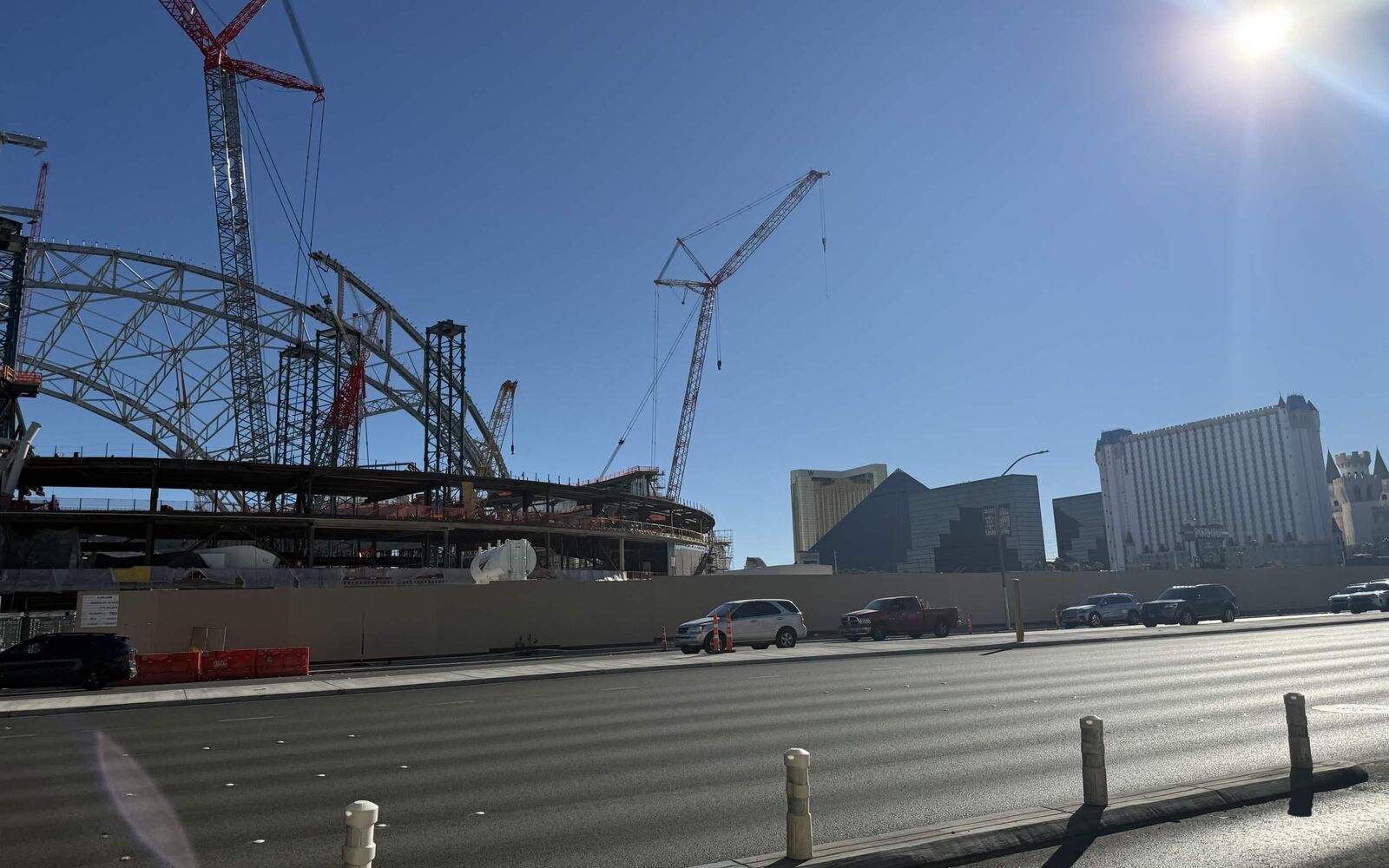
Every date below is drawn from the sources listed at the bottom of this page. Future items are plans, not guarantees.
| Date | Milestone |
|---|---|
| Apr. 19, 2023 | The A's reach a binding agreement for land near the Strip, and Oakland ends ballpark talks. |
| May 2023 | The team shifts to nine acres of the former Tropicana site in a deal with Bally's. |
| June 15, 2023 | Gov. Joe Lombardo signs SB1, authorizing up to $380 million in public funding. |
| Nov. 16, 2023 | MLB owners unanimously approve the relocation to Las Vegas. |
| Mar. 5, 2024 | The team unveils renderings of the domed ballpark by Bjarke Ingels Group and HNTB. |
| Apr. 4, 2024 | The A's announce interim seasons at Sutter Health Park in West Sacramento for 2025 to 2027, with an option for 2028. |
| Sept. 26, 2024 | The A's play their final game at the Oakland Coliseum. |
| June 23, 2025 | Groundbreaking on the former Tropicana site. |
| Feb. 2026 | The team says foundation work is complete. |
| Apr. to May 2026 | The upper deck begins going up and the lower bowl takes shape, with officials saying the project is on schedule. |
| June 2026 | The A's play six regular-season home games at Las Vegas Ballpark in Summerlin. |
| Aug. 2026 | Crews set the second steel roof truss arch. |
| Sept. 2026 | The reported cost reaches about $2.1 billion; the A's have paid for nearly $700 million in work so far. |
| Oct. 7, 2026 | Crews complete the third steel truss arch, the tallest point of the stadium. |
| Mid-2027 | The team plans to begin drawing Clark County public funding after a bond sale. |
| 2027 season | The planned final season based in West Sacramento, with six more home games in Las Vegas. |
| Feb. 29, 2028 | Scheduled construction completion date. |
| 2028 season | Opening Day at the Las Vegas ballpark, the team's stated target. |
Where the A's Play Until Then
The team is in the bridge years. It played the 2025 and 2026 seasons at Sutter Health Park in West Sacramento, finishing 2026 at 64-98, and is scheduled to play 2027 there too, plus six home games at Las Vegas Ballpark in Summerlin. Our Oakland to Sacramento to Vegas timeline covers the full journey.
What Could Still Change the Date
For why the team left Oakland, see why the A's are moving to Las Vegas.
Big stadium projects slip for ordinary reasons: weather, materials, labor, financing, and inspections. Two things are worth watching here. First, Bally's elevated plaza in front of the ballpark: the Associated Press reported in August 2026 that Bally's said it was in the final stages of financing, so the A's would not need a temporary plaza. Second, the timing of the Clark County bond sale, which the team expects around mid-2027. Neither has been reported as a threat to the 2028 opening as of October 2026.
What to Watch Next
- Roof enclosure: owner John Fisher said in September 2026 that the roof would soon cover the building, followed by interior work.
- General season tickets: prices and the official on-sale date for regular seats are still to come.
- Opening date: the 2028 MLB schedule will set the first game at the new park.
- Getting there: parking, transit, and plaza details, tracked in our ballpark location guide.
The Bottom Line
As of October 15, 2026, the A's Las Vegas stadium is on schedule for a February 29, 2028 completion and Opening Day 2028, with one more season in West Sacramento first. That is the plan the team and contractor are reporting, and so far the milestones are landing on time.
Sources
- Las Vegas Review-Journal, When will the A's tap into public funding for now $2.1B Las Vegas stadium construction? (September 29, 2026)
- Las Vegas Review-Journal, A's Las Vegas ballpark hits new heights with completion of 3rd roof truss arch (October 7, 2026)
- Associated Press via the Standard-Examiner, A's stadium takes shape as steel truss arches rise on Las Vegas Strip (August 2026; second arch, Badain, Bally's plaza)
- Associated Press via theScore, A's Las Vegas stadium on track to open before 2028 season (May 2026; lower bowl, upper deck)
- ESPN, Athletics say Las Vegas stadium foundation work complete (February 19, 2026)
- CBS Sacramento, Athletics break ground on Las Vegas stadium (June 23, 2025)
- MLB.com, A's unveil renderings for ballpark in Las Vegas (March 5, 2024)
- ESPN, MLB owners approve Athletics' planned move to Las Vegas (November 16, 2023)
- The Nevada Independent, Lombardo signs A's baseball stadium funding bill (June 15, 2023)
- The Athletic, A's to play in Sacramento's Sutter Health Park beginning in 2025 (April 4, 2024)
- The Sacramento Bee via Yahoo Sports, A's announce 2027 schedule (July 2026)
- talkSPORT, MLB team new stadium takes shape as landmark partnership agreed (September 2026; Fisher remarks)
- Athletics Ballpark Experience, FAQ (checked October 15, 2026)
The LV Athletics is an independent, fan-run site and is not affiliated with Major League Baseball or the Athletics organization.
Find Las Vegas A's tickets and gear through our affiliate partners. Purchases made through these links support independent coverage at no extra cost to you.
For more A's coverage across the network:
Frequently Asked Questions
When will the A's Las Vegas stadium open?
The team's stated target is Opening Day 2028. As of October 2026, the Las Vegas Review-Journal reports construction is on time for a February 29, 2028 completion date. The date of the first game has not been announced.
When will the A's stadium be done?
Construction is scheduled to be complete on February 29, 2028, according to the Review-Journal's September 2026 reporting.
When do the Athletics move to Las Vegas?
Full-time in 2028. The team plays the 2027 season in West Sacramento, with six home games in Las Vegas, and is scheduled to move into the Strip ballpark for the 2028 season.
Where will the Athletics play in 2027?
At Sutter Health Park in West Sacramento, the planned final season of the interim agreement, plus six home games at Las Vegas Ballpark in Summerlin.
Is the A's Las Vegas stadium on schedule?
Yes, as of October 2026. Team president Marc Badain said in August 2026 that it remained on schedule for 2028, and crews completed the third and tallest roof truss arch on October 7, 2026.
When did construction on the A's stadium start?
The groundbreaking was June 23, 2025, on the former Tropicana site. The team said foundation work was complete in February 2026.